• Emailsmok@smok.vc
  • Locationul. Lektykarska 27/2 Warsaw, Poland

12 Deals in 12 Months. Year One of SMOK Ventures in Review

12 months ago we launched SMOK Ventures, an early stage venture capital fund bridging Central European startups to Silicon Valley and Asia. I’d like to give you an update on how we’re doing.

Year 1 in Numbers

  • We’ve reviewed just under 1000 startups and made twelve investments, eight of which are public as of today.
  • We’ve covered many business models from game-dev studios (Exit Plan Games, Nibble Games), saas-enabled marketplaces (HiPets, inSTREAMLY), regular saas (Smarthotel, Authologic), direct-to-consumer (Sunroof, Gaminate) and enterprise.
  • Industry-wise we’ve invested agnostically. We’ve funded startups in hospitality, esports, foodtech, energy, pet services, proptech, ecommerce, game development, fintech and digital health.
  • An average ticket size was 260k USD. The smallest deal we made was 50k USD. The biggest was 500k USD.
  • Nine of the deals were in Poland, the other three in the Nordics (Sweden, Finland, and Estonia).
  • We spent ~3.5M USD , i.e. just below 35% of the fund in year 1.

What does a typical SMOK Founder Look Like?

We’ve noticed there are a few things similar across our portfolio.

  • Our average portfolio startup has 3 co-founders.
  • Average age of our founder is 39, and the median is 40. This is significantly more than an average age of a Polish startup founder which is 28 according to Startup Poland.
  • One in four portfolio startups has at least one female co-founder.
  • All startups have been founded by at least one serial entrepreneur. Yep, all of them. However not all our founders have founded typical startups before. Two had previous experience running agency or lifestyle-type businesses.
  • 63% of our portfolio entrepreneurs have founded businesses before, 30% of them more than one, 11% more than two and 5% more than three.
  • 75% had successful exits in one of their previous businesses.

This is not to say that we’re not looking to invest in first-time founders or entrepreneurs without a history of exits. We’re actually close to signing a term sheet with two such startups just now. But it definitely shows our preference for experienced entrepreneurs. If you’re just starting out, you need to show more traction to get us excited.
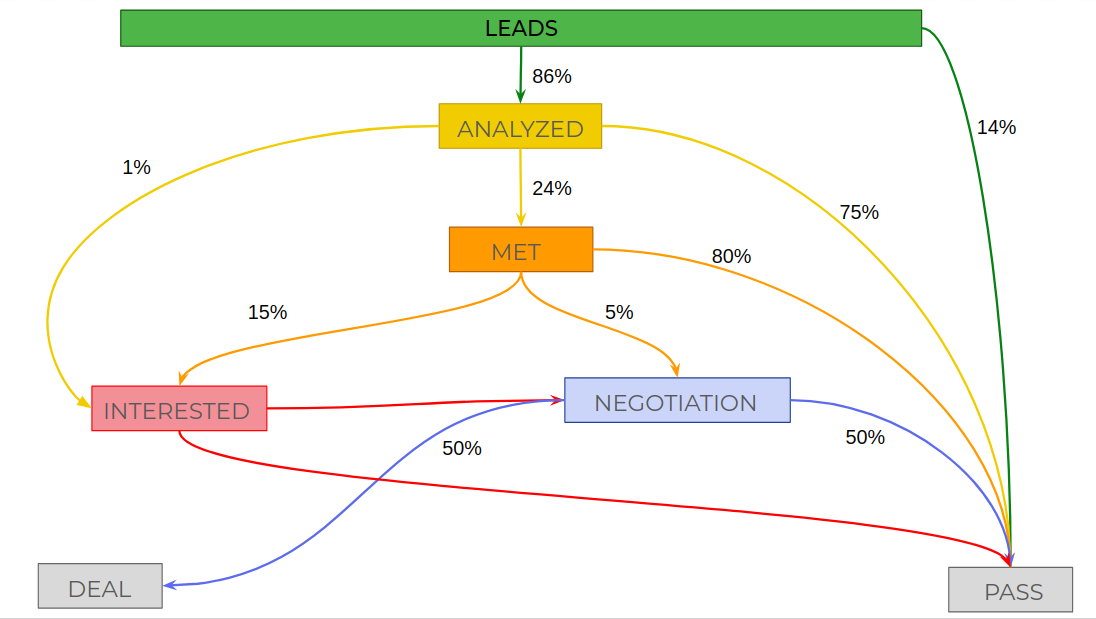
Image for post
SMOK dealflow in 2020

How do startups contact SMOK?

Most startups contact us directly via a cold email. Although I used to be a vocal opponent of cold emails, I slightly changed my mind as three of those actually resulted in deals made. Still, most of the cold emails suck as they are not personalized and feel like spam. A well-written, personalized cold email can be better than a bad intro, though.

Image for post
Sources of dealflow. SMOK Ventures @ 2020

As for the intros, community turned out to be our biggest asset. More than half of all intros came from our network of founders that we’ve built over the last decade. The second biggest source of intros was from fellow VC funds who either wanted us to co-invest or for which the startup was interesting but too early. Limited partners and portfolio founders contributed to around 10% of intros, and our own events did not make a difference for obvious reasons — we only threw one or two before the pandemic took off.

Image for post
Sources of intros. SMOK Ventures @ 2020

Gaming, fintech and digital health among top industries for dealflow

As we’re a software-focused, industry-agnostic fund, we’ve seen dealflow from a variety of industries. Some of the leading industries turned out to be gaming and esports (14%), fintech (10%), health (9%), lifestyle and entertainment (9%), foodtech and mobility (9%), e-commerce and martech (8%).

Image for post
Top industries. SMOK Ventures @ 2020

58% of closed deals resulted from direct communication with the founders

Seven out of twelve deals we’ve made so far resulted from a direct communication between a SMOK partner and startup’s founder. Either one of the partners reached out directly to the founder or the founder contacted the partner directly. Chasing top founders and being up to date is what we love doing at SMOK. We also made sure it’s common knowledge that we like to be the first check in new projects of successful serial entrepreneurs. This communication seems to be paying off.

3 deals were a result of a cold e-mail, namely HiPets, inSTREAMLY and Nibble Games. Although it’s worth mentioning that in all those cases we’ve received a number of positive recommendations from our network of founders before making the final call.

Intros resulted in, surprisingly, only 2 direct deals so far, Smarthotel (thanks Bartek Pucek!) and Gaminate (kudos to Michał Kulka).
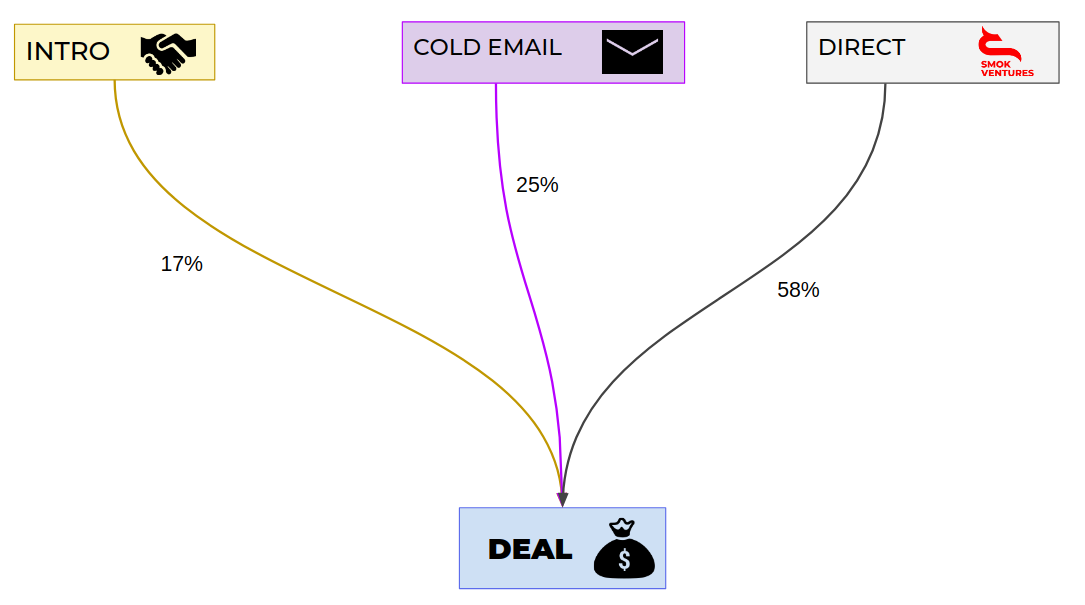
Image for post
Sources of deals made. SMOK Ventures @ 2020

Unconvincing team a top rejection reason

Sadly, we’re in the business of saying ‘no’ a lot. We’ve done it in 98.5% of cases. We’ve decided to track the most common reasons we decide not to invest.

We invest 50k-1M USD into software and gaming startups with at least a subsidiary office in Poland. Interestingly, 50% of startups pitches that we receive is an automatic no because of either no relation to Poland, not our industry focus or wrong stage (usually too late).

Out of the other half, the most common reason we did not get involved was an unconvincing team or product (28% of all cases) and no market validation aka traction (14% of cases). Other reasons involved a bad cap table, COVID-related, a conflict of interest with a portfolio company or simply radio silence on the side of the founders.

Image for post
Rejection reasons. SMOK Ventures @ 2020

SMOK-backed startups raise follow-on rounds easily

One of the key metrics of success of early stage startups is how fast they raise follow-on rounds of funding, and their valuation multiples.

Out of the first seven companies we backed earlier this year, four have already raised follow-on rounds, 2M USD in total, with valuations growing more than twice in less than 6 months.

inSTREAMLY has just landed a 600k USD seed round from London-based investor Supernode Global, after an introduction from our partner Diana, proving that women VC networks work. HiPets, Exit Plan Games and Sunroof also raised follow-on funding just months after we put our money in. Expect more news on the rest of our portfolio soon.

Co-investing with world’s top angels and funds

We like to be the first check in the companies we back so there usually isn’t a lot of space in those pre-seed rounds for others. However, we will always find space for value-adding angels or specialized industry funds that we respect.

So far we’ve invested together with some of the top early stage funds from Finland, Singapore and Japan. We’ve also co-invested with top global angels, including the founders or early employees of companies like Supercell, Rovio, Pipedrive or Mint.

Highlights from portfolio companies

  • Sunroof already made their first acquisition. They acquired a Swedish software company Redlogger to accelerate their bet on becoming an energy marketplace. Sunroof Germany also launched with an ex-Tesla director as country manager.
  • inSTREAMLY was not just the fastest to raise a follow-on round, but also quadrupled their revenues and won two important pitch events: Pirate Summit and Pitch To London (previous winners were Packhelp and Symmetrical).
  • Gaminate made more in revenues in their first four months of operation on the Polish market than we invested into the company back in April. They also just entered the German market and, if they show similarly strong numbers there, they will actually have a chance to become a top European brand for gamers.
  • Exit Plan Games were able to build a dream team of ex leads from CI Games, CD Projekt RED and Techland. Can’t wait to play their first game next year!
  • Smarthotel is now available in 100+ hotels and 1000+ apartments in Europe and Africa. More than 20k guests have already used Smarthotel for remote check-in and safe, contactless communication with hosts and hotel’s reception. This one I’m the most proud of. Given the circumstances and the impact of COVID on the hospitality industry, Smarthotel’s progress is simply breathtaking. I can’t even imagine what they are going to achieve once the coronavirus mess is finally over!
  • Authologic, our most recent public investment, launched only 3 months ago, but already has 2 corporate customers which launched their identity verification widget on production and 6 more agreements have been signed, pending implementation.
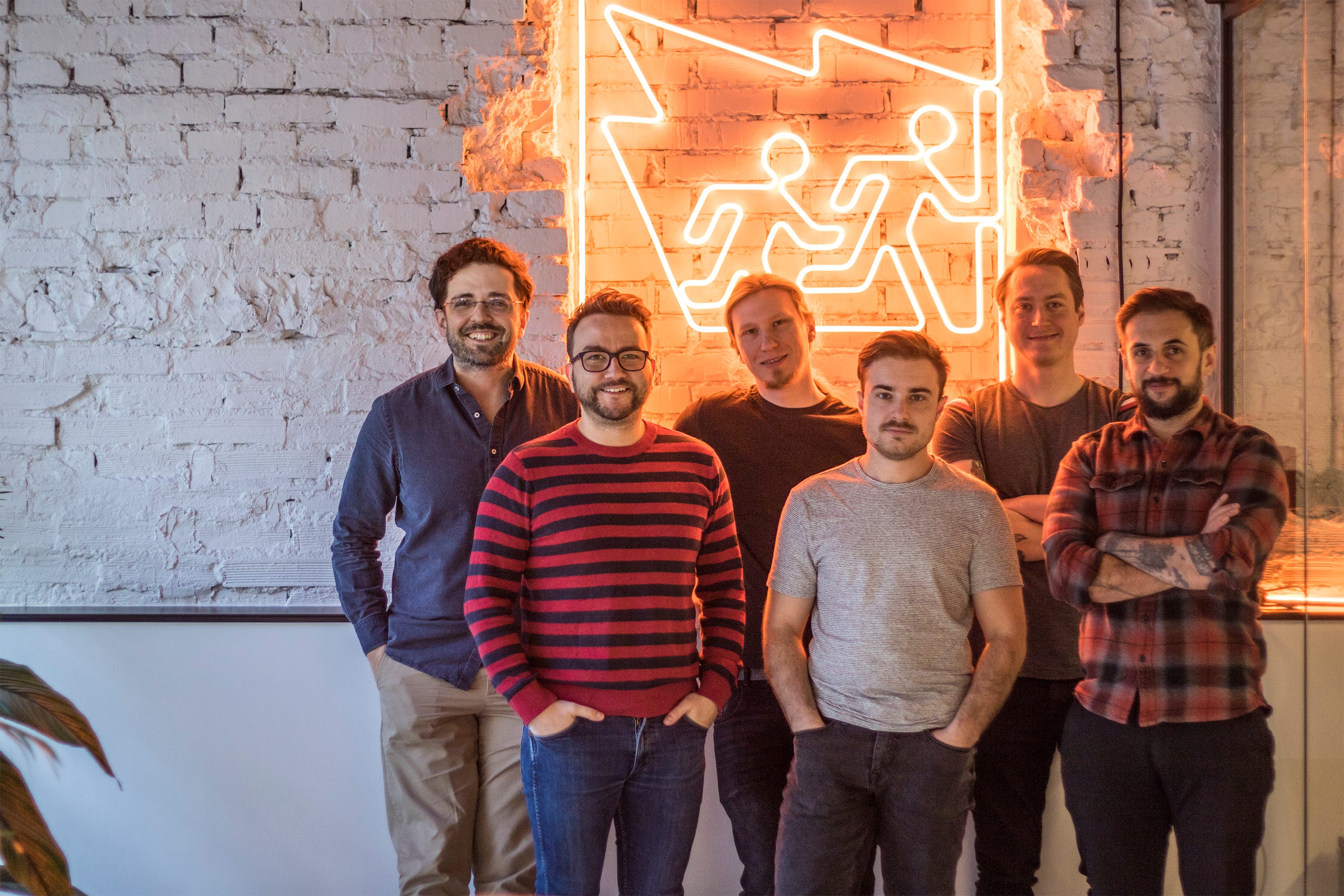
Image for post
Exit Plan’s dream team

The anti-portfolio of SMOK

Occasionally we see a startup too late and miss a chance to properly evaluate it before the deal is done (or we don’t see it at all until it’s too late). In other times we love the team, the product, but we’re so ignorant about the industry that we decide to pass and support the startup from the sidelines. In a few cases the founders decide on a Delaware HQ and don’t want a subsidiary in Poland, which rules the startup out.

The list isn’t long and it includes companies like Jutro Medical, Pilot, Spacelift, nomagic, merXu, edrone, Ramp or Stonly. All those startups form an “anti-portfolio” of SMOK. I love those startups and try support them when I can even though we’re not shareholders and I believe each of them can become a huge and successful global business.

Lessons Learned

The thing I worried the most about when we were starting the fund was us missing deals or being outbid by other investors. So how did this play out?

  • Missing deals or being outbid almost did not happen. We’ve seen over 90% of the startups that raised funding in Poland during the year and only in 2 or 3 cases we might have invested if we learned about the deals earlier. Missing those still hurts, don’t get me wrong. But the reality turned out way nicer than I anticipated.
  • Speed counts. Almost every deal we made was competitive, i.e. startups had multiple offers on the table. We were able to close some of those deals strictly because we were faster and more committed than others.
  • Terms matter but fund’s reputation and culture-fit matter more. In exactly zero deals that we made we have offered a higher valuation than competitors. However, in all of those deals we did offer a clean, well-communicated and easily understood process with specific deadlines we thrived to honor.
  • Communication is key. Founders want to know where they are in the process, and how fast they will know our decision. Once we both agree to a deal, they want to understand what the process looks like between a term sheet and the wire. 100% of the misunderstandings we’ve had have been a result of poor communication on our side.

Are you working on a startup relevant to SMOK?

We’re constantly searching for talented founders looking to build global companies. If you read the above and liked what you saw, please read our investment FAQ first and then:

SMOK Ventures is a Polish/American venture capital fund investing between 50k and 1M USD in early stage startups in Poland and CEE. We like gaming and software startups run by serial founders who think global market domination.

SMOK is hiring an investment team in Ukraine

Last updated: October 2021

SMOK Ventures launched in 2019 to disrupt early stage venture capital investing in the Eastern bloc by connecting top local founders with VC and tech leaders in Silicon Valley and Asia. Now the fund is expanding to Ukraine, Belarus and the Baltics and we’re looking to add first team members outside of the founding group. Someone like you, perhaps?

Who is behind SMOK?

We are a team of entrepreneurs and community leaders with the aim to help early stage startup founders build multi-million-dollar global software enterprises from Central and Eastern Europe.

We’re led by Paul Bragiel (https://en.wikipedia.org/wiki/Paul_Bragiel), entrepreneur turned investor. He has advised or invested in the seed rounds of 200+ companies which includes holdings in twelve unicorns including Uber, Niantic (of Pokemon Go fame), Stripe, Unity, GoJek, Carousell & Zappos. Paul has founded and oversees 7 funds with over $400m under management across 4 continents.

Diana Koziarska and Borys Musielak form the Warsaw-based part of the founding team. They’re both entrepreneurs and community leaders. Before SMOK they co-founded ReaktorX, an acceleration program which helped 150+ founders launch their first businesses. Borys also built a media & AI startup Filmaster and sold it to San Francisco based Samba TV.

We’re also supported by San Francisco-based Dan Bragiel, a venture capitalist and angel investor with an angel portfolio including a number of hyper-growth startups like Opendoor, Virta Health, ShipBob and Playco.

Image for post
SMOK.vc team: Paul (left), Diana, Borys (right)

What’s our track record?

As SMOK we’ve made 12 Deals in 12 months (and added 6 more since writing that article) backing some of the top Polish entrepreneurs like Lech Kaniuk of the Delivery Hero fame, Dorota Rymaszewska, a former VP Sales at Booksy or Maciej Prostak, Maciej Sawicki, and Jarek Sygitowicz who all sold their previous businesses generating profits for their investors.

11 out of the first 12 companies we backed in 2020 have already raised follow-on rounds, with valuations growing more than four times in less than 12 months.

We’ve co-invested with top global seed funds from Finland, Singapore and Japan as well as top global angels, including the founders and VPs of companies like Supercell, Rovio, Pipedrive or Mint. Top European funds like Creandum or earlybird backed our seed investments in Series A stage.

Those were good two years, against all odds 🙂

Why Ukraine?

In a very short time we became the go-to fund for serial entrepreneurs launching their new businesses in Poland. We’re committed to take it to the next level now, with the Central and Eastern European expansion.

When we were deciding on the next countries, we took three things into account:

  • engineering talent pool,
  • startup founding experience,
  • proximity to Poland.

Ukraine is an obvious choice. The country is as big as Poland in population and its engineers are famous worldwide and are already fueling the growth of Silicon Valley’s top companies as well as creating its own unicorns like GitLab, or Grammarly.

We already have dozens of Ukrainian founders in the pipeline, so all this combined, the expansion east sounds like the natural move for SMOK.

Who are we looking for?

Working at SMOK is a lifetime opportunity to break into venture capital and together build one of the top VC funds in Central and Eastern Europe, one country at a time.

You’ll be working on:

  • building the deal flow and community around SMOK in Ukraine, Belarus and the Baltics,
  • analysis and due diligence of our investments in all markets,
  • supporting our portfolio companies,
  • attracting new LPs to the fund,
  • writing, talking and screaming about SMOK in our blogs, social media (we already started building online communities with the CEE Valley group on Facebook and on Twitter), press, meetups and conferences.

Basically, the same stuff we as SMOK founding partners currently work on. We’re a small team with huge ambitions and we require the same from our early team members.

The position is remote-friendly, but the preference is that you are based or prepared to move to either Kyiv, Lviv or Odessa and in the future travel a lot across those countries and potentially the rest of the CEE markets once it’s finally safe to travel, obviously.

How to apply?

We want the process to be transparent and simple.

  1. First, think deeply about why you want to work at SMOK, how does it fit your long-term career goals. We want those to be aligned with ours.
  2. Secondly, read our FAQ, specifically the investment criteria, and find us 3 top early stage deals in CEE that you believe we should invest in. Be prepared to justify your choice.
  3. When ready, apply via this form: https://docs.google.com/forms/d/e/1FAIpQLSeJi3CYh7ryIyeG4H2ROQYi0ybXmz2iDpGdlxA3RmNqf8bVSA/viewform
  4. Ping me via borys@smok.vc when you’re done!

Good luck!

Why We Invested In Authologic

Sometimes, you just know.

I met Jarek Sygitowicz at SXSW in 2021. Neither of us had cash for a hotel, so we crashed on the sofa of Przemek Żebrowski (now one of SMOK’s LPs). It was the kind of startup scrappiness that usually makes for a good story—and in this case, a great investment.

A few months earlier, in September 2020, Jarek pitched me the idea for Authologic. He had no product, no traction, and the company was just three months old. But the vision was clear, the timing was perfect, and the team—made up of serial founders with two successful exits under their belt—was one I would’ve backed blindfolded.

I committed on the spot. It remains one of the easiest investment decisions I’ve ever made.

Stripe for identity

Identity is one of the last unsolved layers of the internet. Every fintech, marketplace, or digital platform needs to know who their users are—but verifying identity online is still painfully fragmented.

Some countries have robust national eID systems. Others rely on third-party KYC providers. Startups often have to stitch together multiple solutions just to serve a single market. It’s messy, expensive, and error-prone.

Authologic solves this by aggregating national and global identity verification APIs into a single SDK. Think Stripe for identity—a plug-and-play solution that works across geographies and use cases, and makes it just as easy to verify a user as it is to accept a payment.

This is especially relevant in the GenAI era, where anyone can forge a document with ChatGPT and a bit of patience. Authologic bypasses the need for selfies and ID scans by using verified digital identities where available—but supports those methods too when needed.

“Stripe made payments simple. Authologic is doing the same for identity.”

A team built for trust

The founding team had already built and exited two companies before starting Authologic—but they weren’t interested in playing it safe. They were going after one of the most foundational problems in digital trust and doing it from day one with global ambition.

A month after our $250K pre-seed investment, they were accepted into Y Combinator’s Winter 2021 batch. The product has since matured into a widely used identity layer for fintechs and regulated industries across Europe and beyond.

We’re proud to have been their first backers—and even prouder to watch them build the infrastructure layer for trusted interactions online.

Are you fundraising for a CEE startup?

If you made it this far, liked what you read, and feel like our thinking resonates—whether you’re a founder or know someone building something great in Central and Eastern Europe—we’d love to hear from you. Check out our investment FAQ and send your deck to borys@smok.vc.

Let’s talk.

Why We Invested In inSTREAMLY

Since launching SMOK in 2019 I’ve only had one goal in mind — to invest in every single globally successful startup founder coming out of Poland. We’ve reviewed about 1 thousand startups in the first 12 months of operation. inSTREAMLY is our third investment. What makes me believe they are one of the above?

What is inSTREAMLY?

inSTREAMLY automates the process of displaying content on multiple live stream channels, making live streaming more accessible for brands and media industry.

Brands can partner with hundreds of streamers simultaneously and display content on all the channels through one dashboard.

Streamers can effortlessly cooperate with brands and be paid for content distribution in an automated way.

The experienced founding team

It’s always about the founders first. If we don’t have a fit, if we don’t believe the founding team can build a global leader in their space, we’d never invest, regardless of how revolutionary the idea, the business model or the technology is. inSTREAMLY founding team consists of four amazing people:

  • Maciej Sawicki, CEO, esports veteran, 5-time founder, community leader and expert in the fields of video marketing and streaming,
  • Damian Konopka, CTO, lead programmer, previously founded a popular esports ranking site streamerzy.pl,
  • Wiktoria Wójcik, a former streamer, now responsible for relationship with the streaming community at inSTREAMLY,
  • Szymon Kubiak, an executive from the agency world, responsible for ad buying and revenue growth.

I’ve known Maciej for a while (more about that later). The moment I met everyone else I knew they are a well-balanced group of people who trust each other and stand for each other. They seemed like the people with something to prove. Experienced. Knowledgable. Hungry. Exactly who I’m looking for!

Bootstrapped till product-market-fit

One of the traits of top founders is their ability to bootstrap their way to the seed round without compromising the cap table. This was the case with two of our previous investments, SmartHotel and Exit Plan Games. Same goes for inSTREAMLY.

When you bootstrap you spend your own money. This shows your dedication to the idea, but also forces the founding team to act lean and spend efficiently. It’s a great foundation for the future. Whatever you’re building, you’ll most likely have to go through multiple crises before reaching the unicorn status. The lean start defines your culture and helps you survive when things go bad.

inSTREAMLY was funded by Maciej for the first year of operations. They built the software, they gave it to befriended esports teams. They got the advertisers interested. They started making money. The moment we got serious about investing the company was already making 25k EUR a month and some of the customers included Netflix and Sony Playstation. It’s a good situation to be at as a founder when you’re raising a seed round.

The huge and growing streaming market

We had a world-class team and good early traction that validates the initial business model. The remaining question was: is the market big enough to be able to produce a unicorn independent from scratch?

inSTREAMLY operates in the USD 42.60 billion video streaming market. Video streaming is one of the fastest growing platforms in 2020 and is projected to grow at a compound annual growth rate (CAGR) of 20.4% till 2027. The company started in the “niche” of esports — a 1 billion dollar market on its own — which the team knows best. But the technology does not restrict them in any way to grow into other niches in the future.

Top esports streamers are big and recognizable enough to be able to attract the advertising and sponsorship deals on their own. However the long tail of mid to smaller streamers currently have no way of monetizing their content except for using the restriction-heavy tools provided by the streaming platforms like Twitch, YouTube or Facebook. The current market is huge and fragmented and screams for an independent ad marketplace like inSTREAMLY to take over.

The timing is also perfect as the competition is still limited while the market is already big enough to produce an independent leader even if we only consider the long tail of esports streamers.

The fundraising process — a few insights

Founders often ask me how to best prepare for venture capital funding. My answer is always the same — build credibility by building things. And let me know about the stuff you’re building, the earlier, the better.

I first met Maciej briefly in 2013 when he had a video agency and they recorded the talks at our monthly OpenReaktor events. Maciej also spoke at one of my events in 2018. However, we only properly met later that year when Maciej reached out about “a few ideas he was thinking about” (not exactly the best pitch :>). One of those ideas turned out to be the early version of what later became inSTREAMLY. We chatted for an hour or so. I learned about how the esports business operates and then forgot about it for a year.

Maciej followed up in July 2019. I have to admit I slept over here a bit. When he reached out about the funding I was focused on another termsheet. I failed to respond to his linkedin message and we almost lost the deal in consequence. It was thanks to my partner Diana who organized a small roundtable about gaming and esports that we got back in touch with Maciej in November.

By then he has sold his agency and focused 100% on his startup. He was testing the technology to place ads into multiple streams at the same time in his own esports team Devils.one and a few other teams. The early results seemed promising. It got me interested. Maciej already had two termsheets on the table at this time so we had to act fast. We soft-committed only a few weeks later and officially committed to invest mid January, after Maciej met my other partner Paul Bragiel in Zurich. Termsheet negotiations took about 2 weeks and we got from commitment to signing the investment agreement in less than 2 months. We officially signed the deal on March 26th, in the middle of the COVID-19 crisis in Poland. It was my only in-person meeting that month 🙂

Image for post
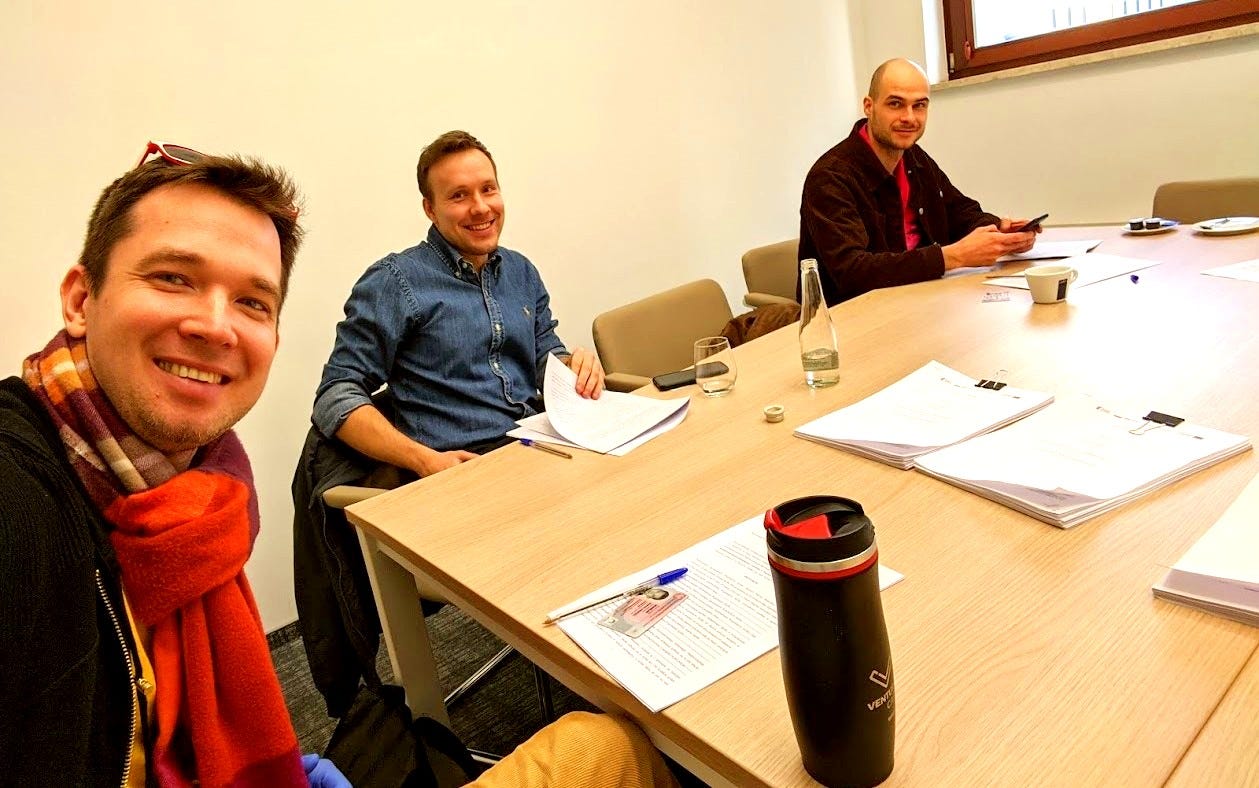
inSTREAMLY notary signing in the middle of COVID-19 crisis in Warsaw

Are you fundraising for a CEE startup?

If you made it this far, liked what you read, and feel like our thinking resonates—whether you’re a founder or know someone building something great in Central and Eastern Europe—we’d love to hear from you. Check out our investment FAQ and send your deck to borys@smok.vc.

Let’s talk.