

Since launching SMOK in 2019 I’ve only had one goal in mind — to invest in every single globally successful startup founder coming out of Poland. We’ve reviewed about 1 thousand startups in the first 12 months of operation. inSTREAMLY is our third investment. What makes me believe they are one of the above?
What is inSTREAMLY?
inSTREAMLY automates the process of displaying content on multiple live stream channels, making live streaming more accessible for brands and media industry.
Brands can partner with hundreds of streamers simultaneously and display content on all the channels through one dashboard.
Streamers can effortlessly cooperate with brands and be paid for content distribution in an automated way.
The experienced founding team
It’s always about the founders first. If we don’t have a fit, if we don’t believe the founding team can build a global leader in their space, we’d never invest, regardless of how revolutionary the idea, the business model or the technology is. inSTREAMLY founding team consists of four amazing people:
- Maciej Sawicki, CEO, esports veteran, 5-time founder, community leader and expert in the fields of video marketing and streaming,
- Damian Konopka, CTO, lead programmer, previously founded a popular esports ranking site streamerzy.pl,
- Wiktoria Wójcik, a former streamer, now responsible for relationship with the streaming community at inSTREAMLY,
- Szymon Kubiak, an executive from the agency world, responsible for ad buying and revenue growth.
I’ve known Maciej for a while (more about that later). The moment I met everyone else I knew they are a well-balanced group of people who trust each other and stand for each other. They seemed like the people with something to prove. Experienced. Knowledgable. Hungry. Exactly who I’m looking for!
Bootstrapped till product-market-fit
One of the traits of top founders is their ability to bootstrap their way to the seed round without compromising the cap table. This was the case with two of our previous investments, SmartHotel and Exit Plan Games. Same goes for inSTREAMLY.
When you bootstrap you spend your own money. This shows your dedication to the idea, but also forces the founding team to act lean and spend efficiently. It’s a great foundation for the future. Whatever you’re building, you’ll most likely have to go through multiple crises before reaching the unicorn status. The lean start defines your culture and helps you survive when things go bad.
inSTREAMLY was funded by Maciej for the first year of operations. They built the software, they gave it to befriended esports teams. They got the advertisers interested. They started making money. The moment we got serious about investing the company was already making 25k EUR a month and some of the customers included Netflix and Sony Playstation. It’s a good situation to be at as a founder when you’re raising a seed round.
The huge and growing streaming market
We had a world-class team and good early traction that validates the initial business model. The remaining question was: is the market big enough to be able to produce a unicorn independent from scratch?
inSTREAMLY operates in the USD 42.60 billion video streaming market. Video streaming is one of the fastest growing platforms in 2020 and is projected to grow at a compound annual growth rate (CAGR) of 20.4% till 2027. The company started in the “niche” of esports — a 1 billion dollar market on its own — which the team knows best. But the technology does not restrict them in any way to grow into other niches in the future.
Top esports streamers are big and recognizable enough to be able to attract the advertising and sponsorship deals on their own. However the long tail of mid to smaller streamers currently have no way of monetizing their content except for using the restriction-heavy tools provided by the streaming platforms like Twitch, YouTube or Facebook. The current market is huge and fragmented and screams for an independent ad marketplace like inSTREAMLY to take over.
The timing is also perfect as the competition is still limited while the market is already big enough to produce an independent leader even if we only consider the long tail of esports streamers.
The fundraising process — a few insights
Founders often ask me how to best prepare for venture capital funding. My answer is always the same — build credibility by building things. And let me know about the stuff you’re building, the earlier, the better.
I first met Maciej briefly in 2013 when he had a video agency and they recorded the talks at our monthly OpenReaktor events. Maciej also spoke at one of my events in 2018. However, we only properly met later that year when Maciej reached out about “a few ideas he was thinking about” (not exactly the best pitch :>). One of those ideas turned out to be the early version of what later became inSTREAMLY. We chatted for an hour or so. I learned about how the esports business operates and then forgot about it for a year.
Maciej followed up in July 2019. I have to admit I slept over here a bit. When he reached out about the funding I was focused on another termsheet. I failed to respond to his linkedin message and we almost lost the deal in consequence. It was thanks to my partner Diana who organized a small roundtable about gaming and esports that we got back in touch with Maciej in November.
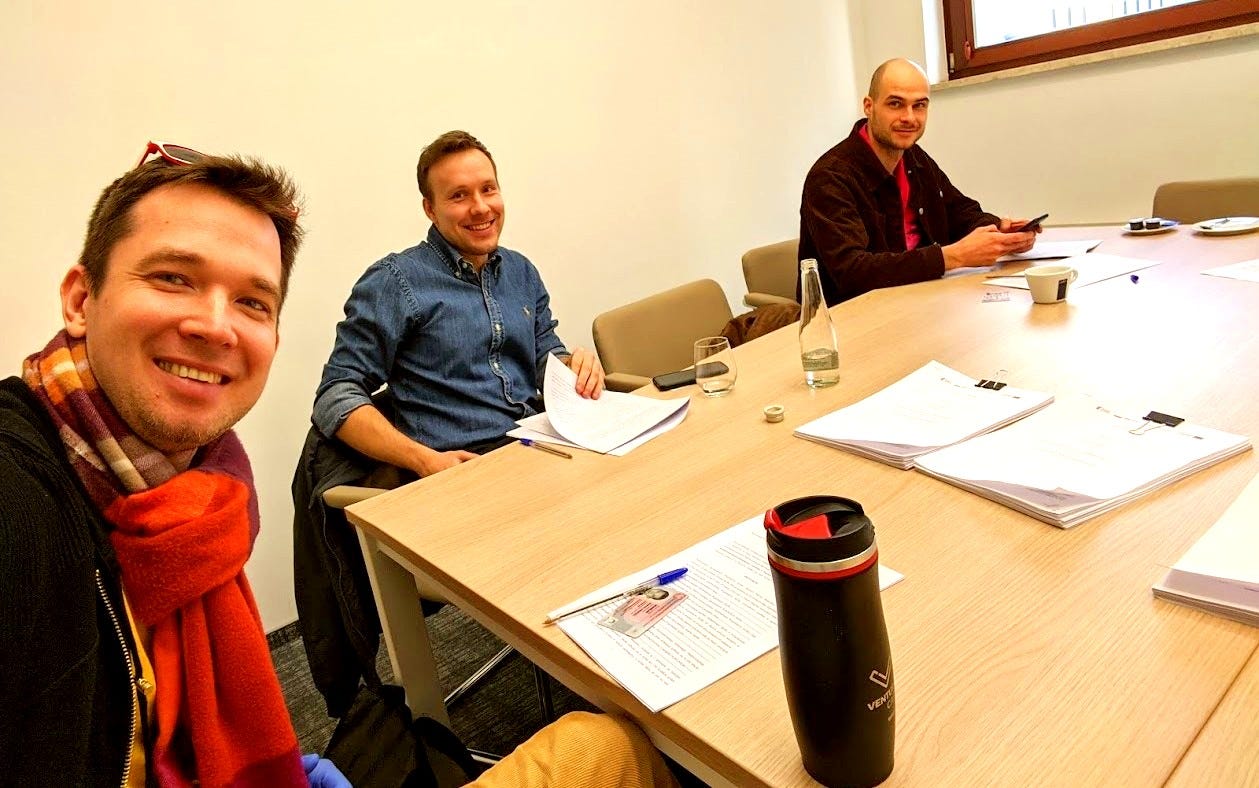
By then he has sold his agency and focused 100% on his startup. He was testing the technology to place ads into multiple streams at the same time in his own esports team Devils.one and a few other teams. The early results seemed promising. It got me interested. Maciej already had two termsheets on the table at this time so we had to act fast. We soft-committed only a few weeks later and officially committed to invest mid January, after Maciej met my other partner Paul Bragiel in Zurich. Termsheet negotiations took about 2 weeks and we got from commitment to signing the investment agreement in less than 2 months. We officially signed the deal on March 26th, in the middle of the COVID-19 crisis in Poland. It was my only in-person meeting that month 🙂
Are you fundraising for a CEE startup?
If you made it this far, liked what you read, and feel like our thinking resonates—whether you’re a founder or know someone building something great in Central and Eastern Europe—we’d love to hear from you. Check out our investment FAQ and send your deck to borys@smok.vc.
Let’s talk.
